

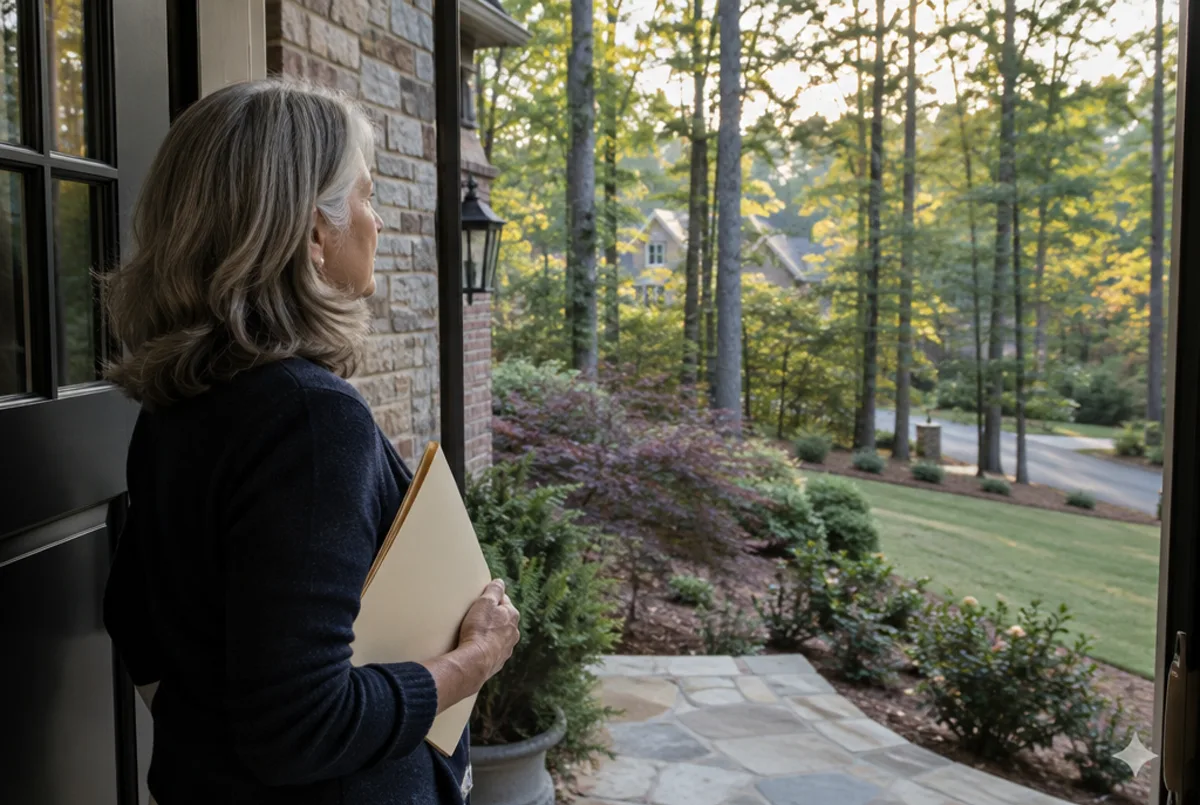
Elizabeth met me at the door of a four-bedroom house in East Canton. For the last three years, exactly one person has lived in it. Names here are the ones we always use. The situations are real, the people stay private. She had a folder. In it was a note from her daughter in Charlotte and a question she had been asking the ceiling at night: “Do I sell now, or do I wait for things to settle down?” She said “settle down” the way people say it about weather.
Here is her problem, and it is smaller than the folder. Prices in Cherokee County stopped climbing this year, and a house listed the way the neighbors listed in 2022 now sits. And here is the way through, because the same August numbers show it: a house that is ready, priced from this year’s sales, still finds its buyer in about a month. The market did not close the door. It changed what the plan has to look like, and the plan decides more than the month does.
The feeling comes before any number. There is a particular tiredness in owning more house than you need: the third bedroom you dust for nobody, the stairs you notice a little more each winter. Next to it sits a quieter fear, that the day you finally sell will turn out to be the wrong day. Here is the answer I gave her. Sell now if the house is ready and you know what comes after it. Wait if either of those is unsettled, and use the wait. Both can be a plan. Neither is waiting for the weather.
What is the market actually doing in Cherokee County right now?
In August, 354 homes closed in the county, according to the Cherokee Association of Realtors. The one in the middle sold for $500,500. A year earlier, the middle home sold for $515,000. So the dip is about $14,500, a decent used car, not a house. In 2017 it was $245,882, so the county has more than doubled. Prices did not fall this year. They stopped, like a runner who stops after a sprint and stands there breathing. The August numbers tell the full story.
The number that matters more is time. The homes that sold in August had been listed a median of 27 days, about one billing cycle on the power bill. The 1,386 homes still for sale had been listed a median of 51 days, a school kid’s whole summer. Two clocks, same month. What separates them is whether the house was priced for this year or for 2022, and whether it was ready the day the sign went up. Both are decisions, not weather. Which clock your house lands on is the part you control.
What does waiting actually buy me?
Two things, and only one of them is real.
The real one is time to get ready. A roof conversation. A kitchen that photographs ten years older than the rest of the house. Those take weeks, and a seller who lists first pays twice: in showings that go nowhere, and in a price cut the whole street can see on Zillow. Fix them first and the same house lands on the 27-day clock.
The other thing waiting is supposed to buy is a better market, and that one is a guess. The National Association of Realtors’ forecast for 2026 has prices up modestly, rates roughly where they are, and no recession. Nothing in it rescues a house that is not ready. Nothing in it punishes a house that is. Waiting for the market to tell you when is like waiting for the cat to come when it is called. It might. It is not a plan.
What does waiting cost?
Not the mortgage, for most sellers I sit with in East Canton. The cost is quieter: another year of more house than you need, and the decision aging until next March arrives with a deadline attached, because a knee, a grandchild, or a daughter in Charlotte has forced it. If you are buying again, both numbers move together, so a year waiting for a better price on this house is usually a year paying more for the next one. The answer is not to rush. It is to give the wait a date and a job.
What has to be true for “now” to be the right answer?
Three things. The house shows well today, or can within thirty days. You know the next address, or you have a plan for the gap between houses: selling before you buy with a short rental in between, or staying in the house after closing while the next one comes together. And the price is built from this summer’s sales in Canton, not from what the neighbor got in 2022.
None of that happens by itself. Someone builds the price, someone gets the house ready, and someone negotiates the offer when it comes, and who runs those three changes the outcome more than the calendar does. That is the work we do, and it is the one choice worth making carefully before the sign goes up.
If all three hold, list. The practical fall window runs from now to the middle of November. A fall listing is seen by fewer buyers, but it competes against fewer houses. A normal sale here still runs about two months from listing to closing, so an October listing fits inside the window.
What has to be true for “wait” to be the right answer?
The house needs work that cannot be finished by the middle of October. Or the next step is genuinely undecided, not just unspoken. Or you would be selling to get away from something rather than toward something, and that deserves more room than a fall calendar gives.
If that is you, use the wait instead of spending it. Settle where you are going. Build the file a buyer at this level expects: roof age, HVAC records, the basement permit, the survey. Pull the comparable sales again in January. A seller who does those three things over the winter walks into spring with a plan, which is the one thing most spring sellers do not have.
What are the fears, and which ones are real?
Elizabeth had four, the same four I hear at most kitchen tables in Canton.
What if I list and nobody comes? Then the price or the presentation is wrong, and you learn it in three weeks, not six months. A fixable problem, not a verdict.
What if I sell and cannot find the next house? That is what the gap plan is for. It gets written before the sign goes in the yard.
What if I wait a year and it gets worse? Then you will have spent the year getting ready. A ready house in a slower market still sells ahead of an unready one in a faster market.
What if I get less than the neighbor got? You will, and so will everyone who sells after a sprint. The neighbor’s number was a moment, not a floor.
What if I do not have to move at all?
Then the question was never now or wait. It is whether this house is doing what you want it to do. Stay, and the equity stays where it is. Sell, and buy the house that fits the next twenty years instead of the last twenty. Sell, and rent for a season while you decide.
Elizabeth chose to wait, and I think she chose right, because she chose it with a date. The roof gets done in October. The basement gets emptied over the holidays. Her daughter comes in January to help decide between Charlotte and a smaller place near the river. She will list in March with the file built and the price pulled from that month’s sales. She is not waiting for the market anymore. She is waiting for her own plan to finish, which is a different thing entirely.
The market will never tell you which month is right. It only tells you, every month, that a ready house still finds its buyer. The rest was always yours to decide.