

No, you’re not required to have one. And walking into a model home without one is the most expensive free decision in real estate.
Here’s what most buyers don’t realize until later. The friendly person who greets you at the model home is a licensed agent, and they work for the builder. They’re not being deceptive about it. Nobody just thought to ask.
Who does the builder’s sales agent work for?
The builder. That’s who hired them, that’s who pays them, and that’s whose interests they represent in the transaction.
They can be helpful, knowledgeable, and completely honest with you while doing exactly that. Representation isn’t about someone being nice to you. It’s about who has a legal duty to advocate for your side when the two sides want different things.
Georgia defines these relationships in statute, and the Georgia Real Estate Commission regulates how they’re disclosed. If you’d like the general version of this distinction, we covered it in listing agent versus buyer’s agent. New construction is the same principle with higher stakes, because the contract is written by one side.
Does having an agent cost you more on a new build?
Not in the way most people assume, and the honest answer is that it depends on terms you negotiate.
Two things are true and they get conflated constantly. Your agent’s compensation is set in the written agreement between you and your agent. Separately, some builders offer to pay part or all of a buyer agent’s compensation, and some don’t. That varies by builder, by community, and sometimes by the week.
What is not true is the idea that the price drops if you show up alone. Builders hold pricing to protect the value of the homes already sold in the community. The line item for sales cost is in their budget whether you bring representation or not.
Ask the builder directly what they offer. Put your own agreement in writing. Those are two conversations, not one.
Why does the first visit matter so much?
Because many builders require your agent to register you, or be physically present, on your very first visit to that community.
Miss it and the builder may decline to recognize your agent on that purchase at all. Not as a penalty, just as policy. You can sometimes fix it with a phone call before you sign anything, and sometimes you can’t fix it at all.
This is the single most avoidable mistake in new construction. A Saturday drive through a neighborhood, a model home that happens to be open, a sign-in sheet at the front door, and representation on a $500,000 purchase is gone before lunch.
If you’re touring communities, tell your agent first. That’s the whole precaution.
Is a builder’s contract different from a resale contract?
Yes, substantially. It’s the builder’s own form, not the standard Georgia contract used in resale.
What tends to differ:
- Contingencies are fewer and narrower
- Earnest money is often larger, and becomes non-refundable earlier
- Completion dates carry allowances for delay that favor the builder
- Warranty terms, and what counts as a covered defect, are defined by the builder
- Many include binding arbitration for disputes
None of that is improper. It’s a contract drafted by one party, which is exactly what you’d expect. It’s also why “I read it and it seemed fine” is a sentence that has cost people a lot of money. Have your closing attorney review it before you sign, not after.
Do you still need an inspection on a brand new house?
Yes, and ideally more than one.
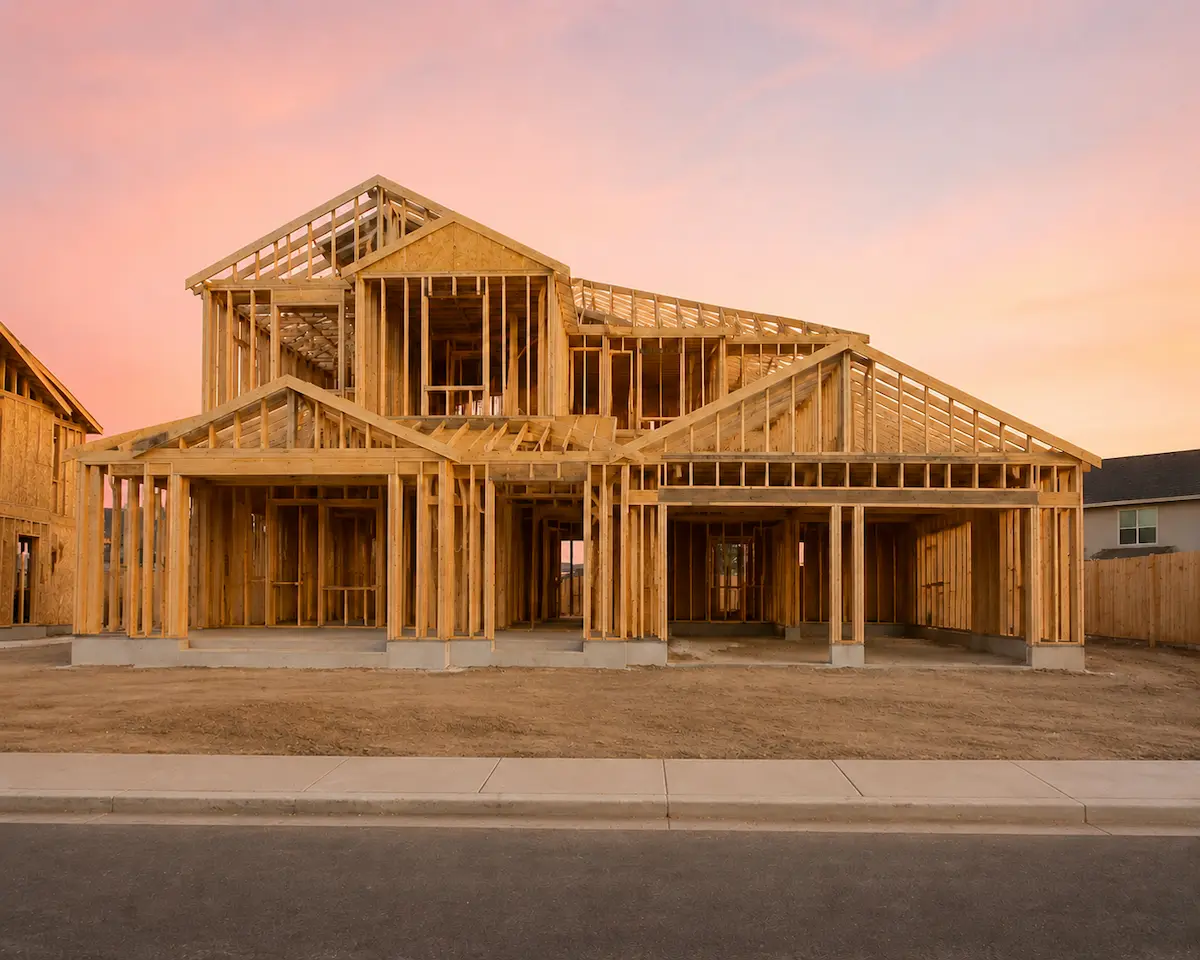
The three that matter: a pre-drywall inspection while the framing, wiring, and plumbing are still visible, a final inspection before closing, and an eleven-month inspection before the typical one-year warranty period expires.
New does not mean flawless. It means nobody has lived in it long enough to find out. The county inspector signs off on code compliance, which is a floor, not a standard of workmanship.
What about the builder’s lender?
Builder incentives are often tied to using an affiliated or preferred lender, and that can be a real benefit or a mediocre one depending on the terms.
The way to know is to compare. Get the incentive in writing, get a competing offer, and look at the total cost rather than the headline. Sometimes the builder’s package genuinely wins. Sometimes the incentive is worth less than the rate difference over the life of the loan, and our note on closing costs in Georgia covers which of those numbers actually move.
We refer our clients to a mortgage broker who can run the comparison on your file. You are free to work with any lender you choose.
The short version
You can absolutely buy new construction without representation. People do it every week, and most of them close and move in and are perfectly happy.
They just negotiated a contract written by the other side, against a professional who does this daily, without anyone in the room whose job was to look out for them. Which works out fine right up until the week it doesn’t.